
« Bogie Thoughts

Read what you publish
This is a rule. Maybe it’s Bogie Rule #1.
You know this is important because I added an exclamation point to the graphic. I’m stingy with those.
Anything you ever produce needs to make sense to the reader, viewer, or listener. I found this today in an eye clinic.
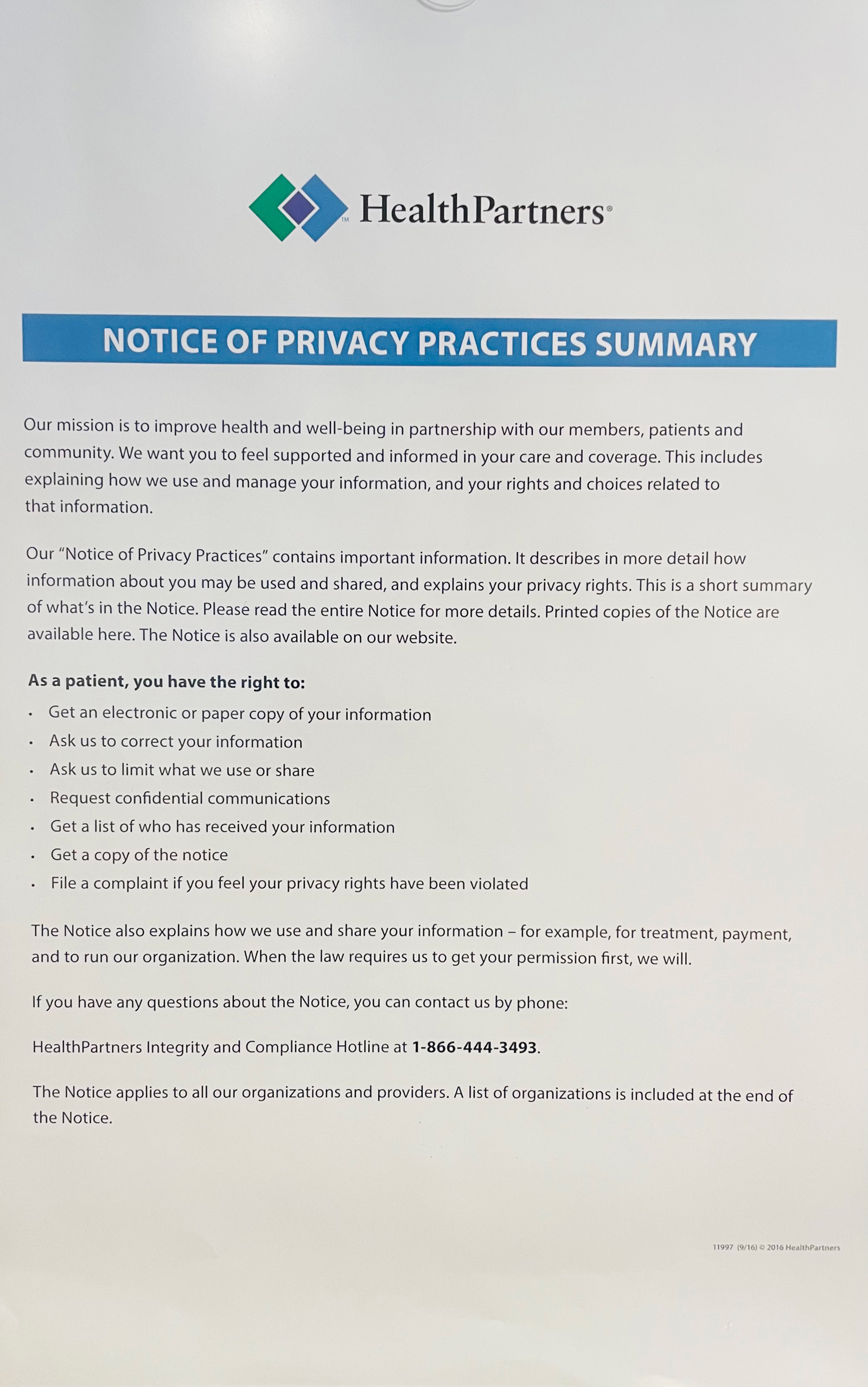
Whoever put this poster up did not read that last line in context.

A list of organizations is not included at the end of the notice. Even if we step back.
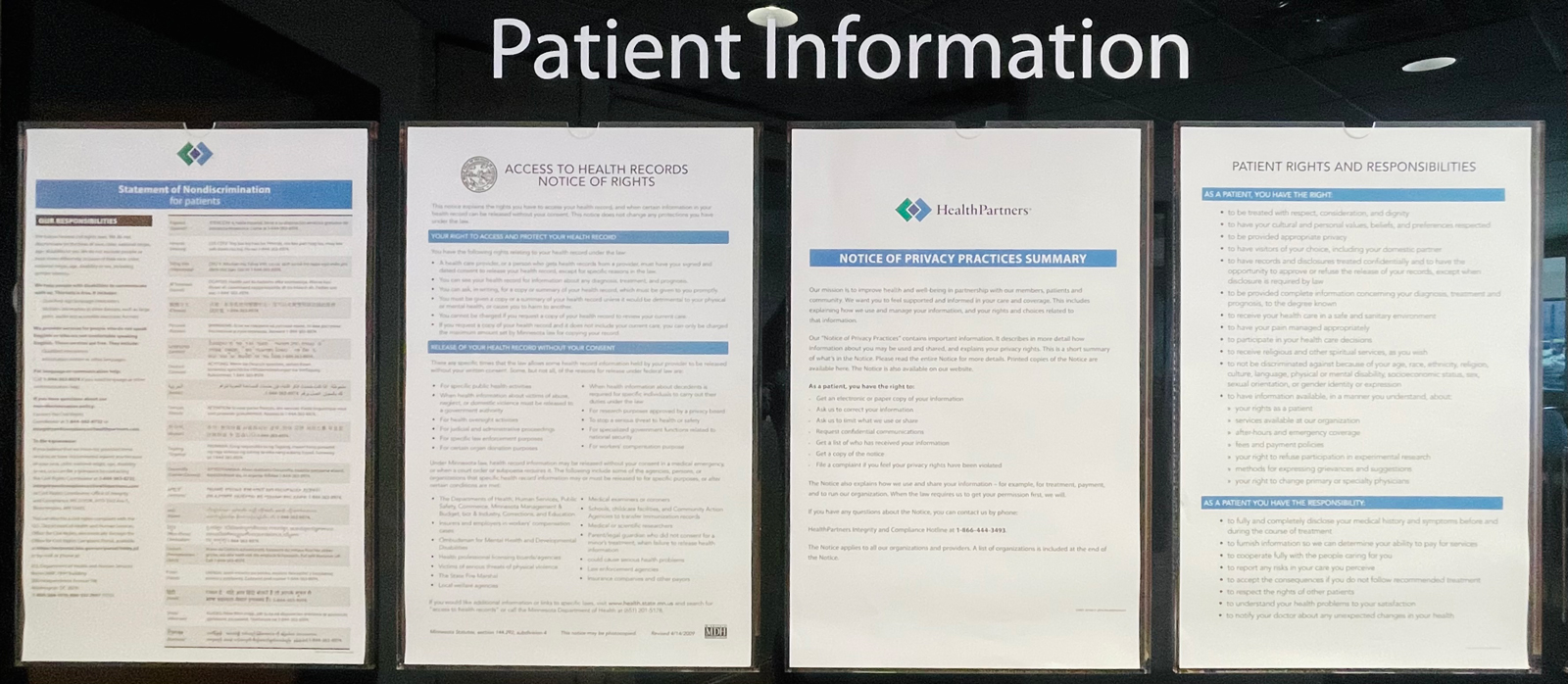
The list is included in the printed copy of the notice available at the front desk or on the website, but what I see here on the wall looks like the notice. That sentence should have indicated the whereabouts of the list in relation to this poster, not simply “the notice.” This happens often when one source is created to be reused for other channels. Many web pages began life as brochure content. That brochure content usually ended with “Learn more” and a URL or QR code to a web page. That web page typically was made by copying the content from that brochure and pasting it online.
Use a website-first approach to content. You can compile and refine your content on your website. There’s not a long publication cycle. Typos can be fixed in seconds. It can be shared and reviewed by dozens of sets of eyes easily. I design WordPress sites that produce professional-looking printouts. Website navigation and content that shouldn’t be printed isn’t printed. This eliminates the need for many print pieces. It reduces the time needed to develop polished content that can be used online and offline.
Even in this environment though, you always need to read what you publish. You may grab a paragraph from a web page with the perfect message for a flyer or postcard, but if it references something nearby that isn’t going to be nearby in the other context, you end up with ghost content.